Keyword cannibalization
By BeeRanked · September 17, 2026
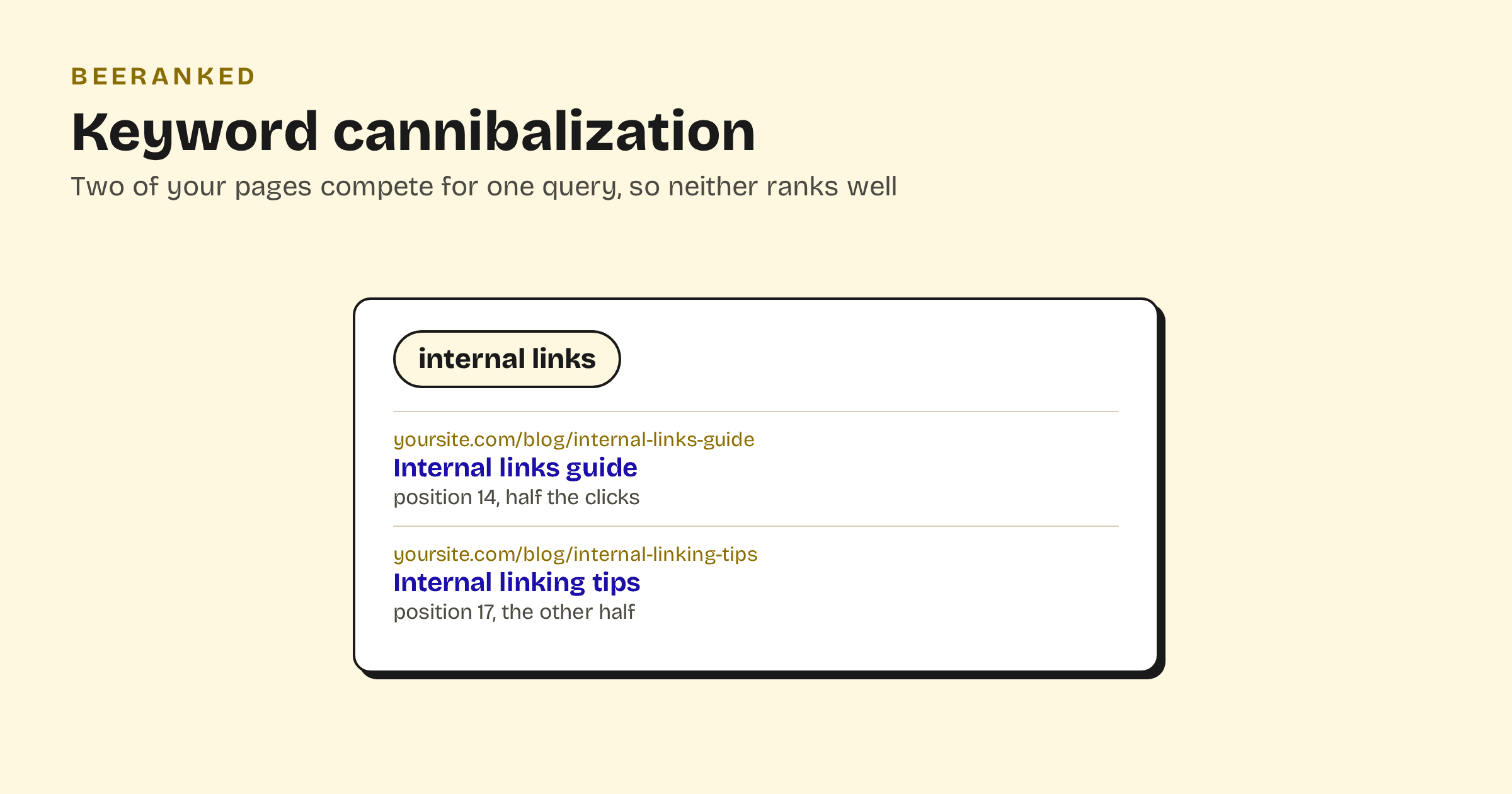
Keyword cannibalization is when two or more of your own pages compete for the same search query, splitting clicks, links, and relevance signals between them so that neither ranks as well as one consolidated page would. The name is apt: your pages are eating each other's results.
How to spot it
The reliable signal lives in Google Search Console: filter the Performance report by a query and look at which pages received its impressions. Two of your URLs both showing for the query, both stuck at mediocre positions, is the classic picture. Other symptoms: the URL Google shows for the query keeps flip-flopping between two pages, or a new article pushed an older, better one down.
Not every overlap is cannibalization. Two pages serving clearly different intents behind similar words, say a product page and a tutorial, can both rank happily. The problem is two pages doing the same job.
How to fix it
Merge and redirect. The default fix. Fold the weaker page's useful content into the stronger page, then point a 301 redirect from the weaker URL at the survivor so its signals consolidate.
Differentiate. If both pages deserve to exist, sharpen each one's intent until they stop overlapping, and use distinct titles and anchor text in the links pointing at each.
Canonicalize. For near-identical variants of one page, a canonical URL tells Google which version to rank; that is the duplicate content case.
Prevention is a content plan where each target query has exactly one owner, the discipline behind topic clusters.
Cannibalization in BeeRanked
When you do merge pages, BeeRanked handles the risky part: the redirect is created for you and every internal link that pointed at the retired page is rewritten to the surviving one, so consolidation never leaves broken links or leaking signals behind.