301 redirect
By BeeRanked · September 14, 2026
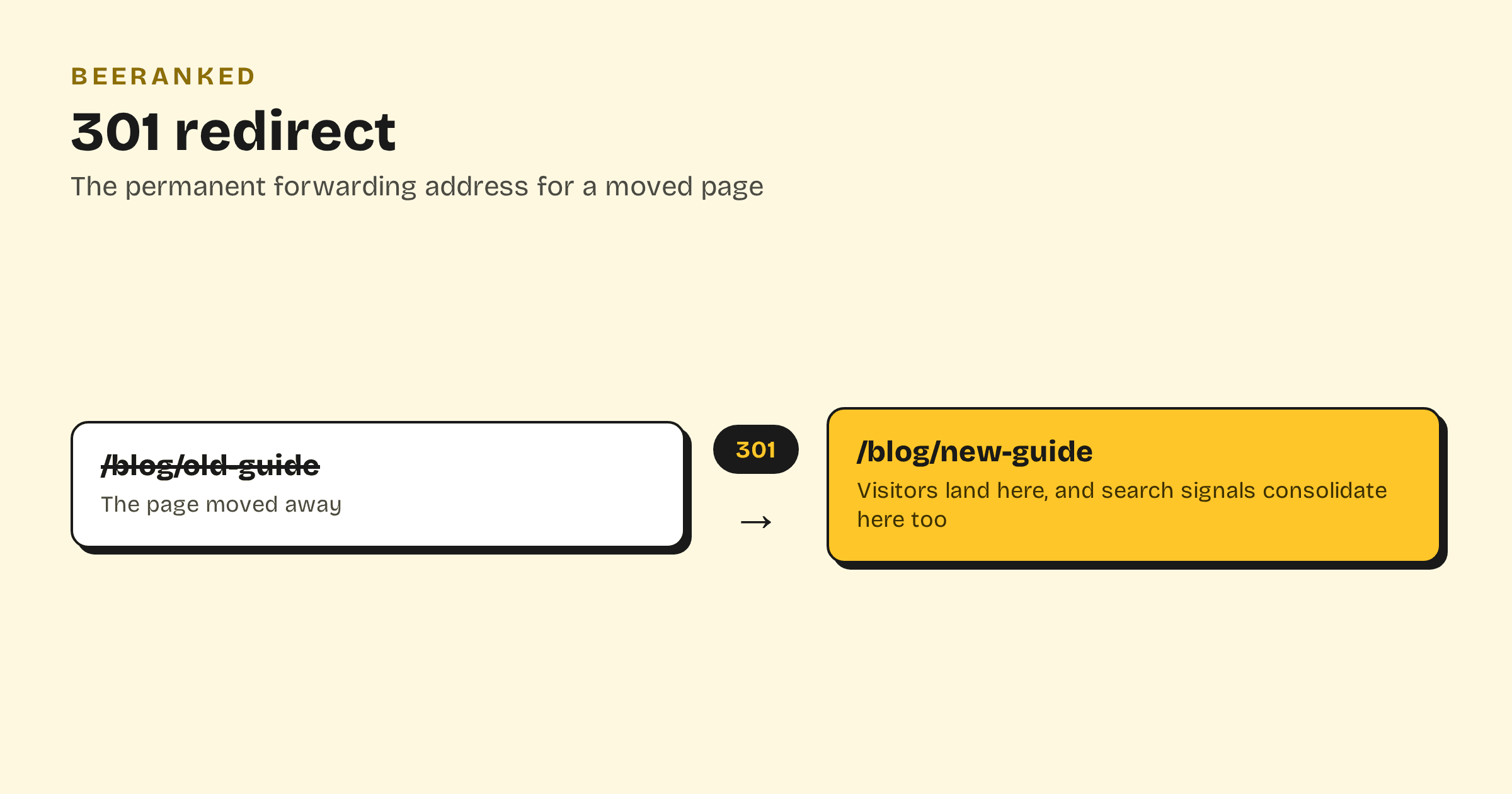
A 301 redirect is a permanent forwarding instruction: anyone requesting an old URL, whether a visitor or a search engine crawler, is sent to the new one, and search engines are told the move is for good. It is the mechanism that lets you rename or restructure pages without losing what their old addresses earned.
Permanent versus temporary
The distinction decides what shows in search. Per Google's redirect documentation, permanent redirects "show the new redirect target in search results", while temporary ones (302, 307) "show the source page in search results". A permanent redirect is also a canonicalization signal: Googlebot follows it and treats it as "a signal that the redirect target should be canonical", which is how the old page's link equity consolidates on the new address. Use 301 (or 308) when a page has moved for good, and a temporary redirect only when the old URL will come back.
Doing them right
Server-side first. Google's order of preference is HTTP redirects first, meta refresh only if you must, JavaScript only as a last resort.
Redirect to the closest equivalent page. A redirect should complete the visitor's intent, which the homepage rarely does.
One hop. Chains of redirects slow visitors and dilute the signal; point old URLs straight at the final destination.
Every URL change ships with one. A rename without a redirect discards every link the old URL ever earned; it is the core rule of site architecture changes and of content pruning.
Redirects in BeeRanked
BeeRanked creates the 301 automatically whenever a page's URL changes, rewrites your internal links to the new address, and gives you a redirects manager for custom rules, no server configuration involved. The full story is in keep your rankings when URLs change.