Pillar page
By BeeRanked · September 7, 2026
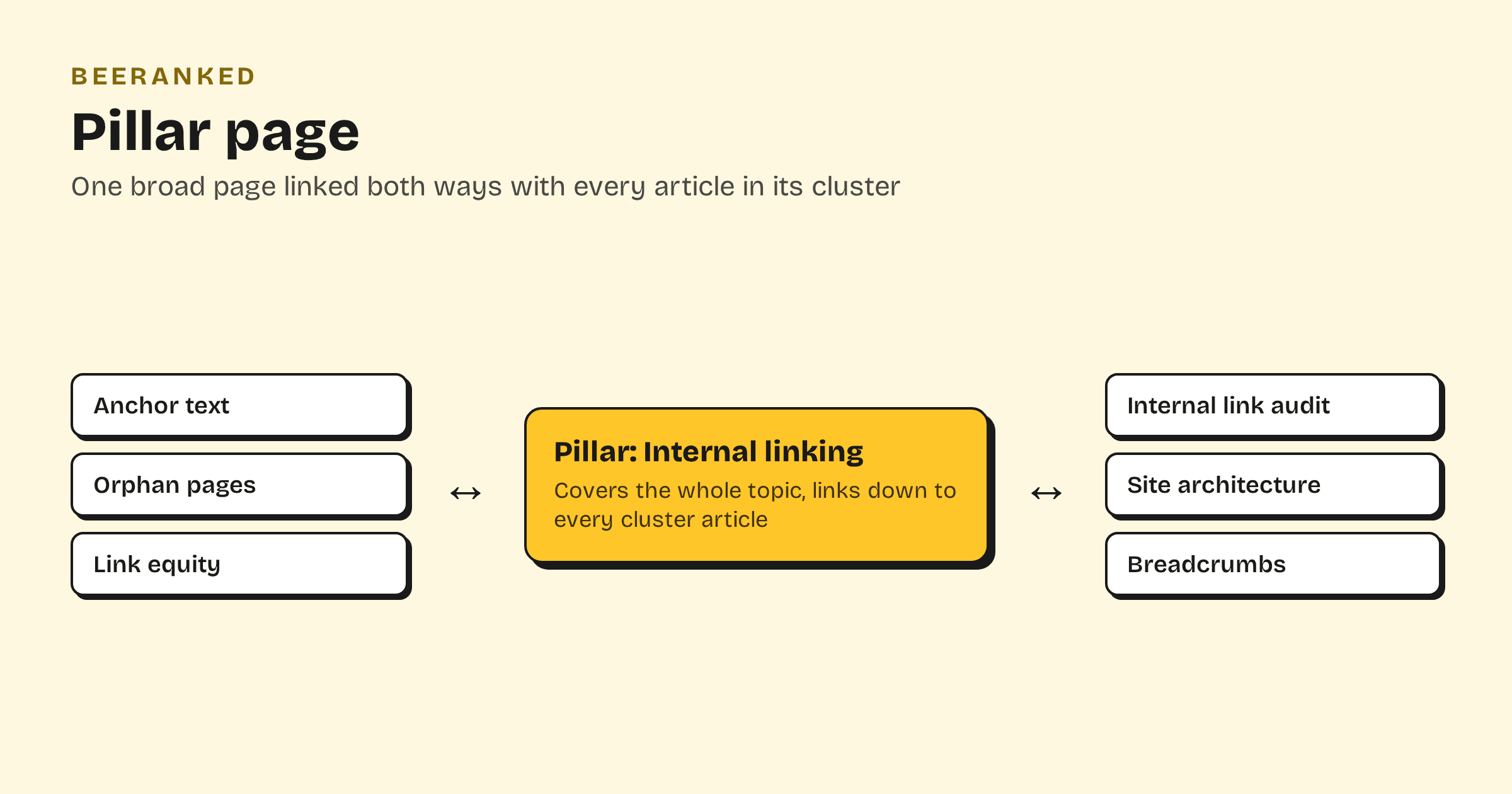
A pillar page is one broad page that covers a whole topic at overview depth and links out to the narrower articles that cover each part in detail. Those articles, the cluster, link back to the pillar. Together they form a topic cluster, the structure search engines read as "this site covers the topic, not just one query".
What makes a pillar work
Breadth over depth. The pillar answers the topic's main questions well enough to stand alone, then hands each deep dive to a cluster article. Depth lives in the cluster.
Links both ways. The pillar links to every cluster article; every cluster article links back with descriptive anchor text. The two-way links are the structure; without them it is just a long page.
One pillar per topic. Two pillars on the same topic compete with each other, which is keyword cannibalization by design.
The pillar usually targets the topic's broadest, hardest query, and it climbs on the strength of the cluster: every article added and linked sends it link equity and context. We wrote up the full method in topic clusters and pillar pages.
Pillar pages in BeeRanked
Categories in BeeRanked give a cluster a home: assign the pillar and its articles to one category and every article automatically shows a "Continue reading" block of its siblings, so the cluster interlinks itself as it grows. The category archive page doubles as a machine-readable table of contents for the topic.